
May 12, 2026
What 2,400 exercises on Uplimit reveal about the new shape of online learning

Steve Haraguchi
Head of Platform Enablement & Learning Design, Uplimit
The platform set the ceiling. Not the learner.
For most of online learning's history, the format was fixed: content, then a quiz. Watch a video, answer four questions. This was just how online learning worked, and the platforms were built accordingly. I built many of these myself leading professional programs at MIT and Stanford, pioneers in online learning at the time. But that design principle was never about what learners were capable of thinking, creating, or demonstrating. It wasn't even about what we knew worked from great classrooms. It was about what platforms could measure. And what they could measure was very little.
At Uplimit we’ve built a set of tools - open text response, file response, voice conversation - that all enable a new type of hands on practice, application, and synthesis. And the data tells a story worth sharing.
A year of higher order thinking
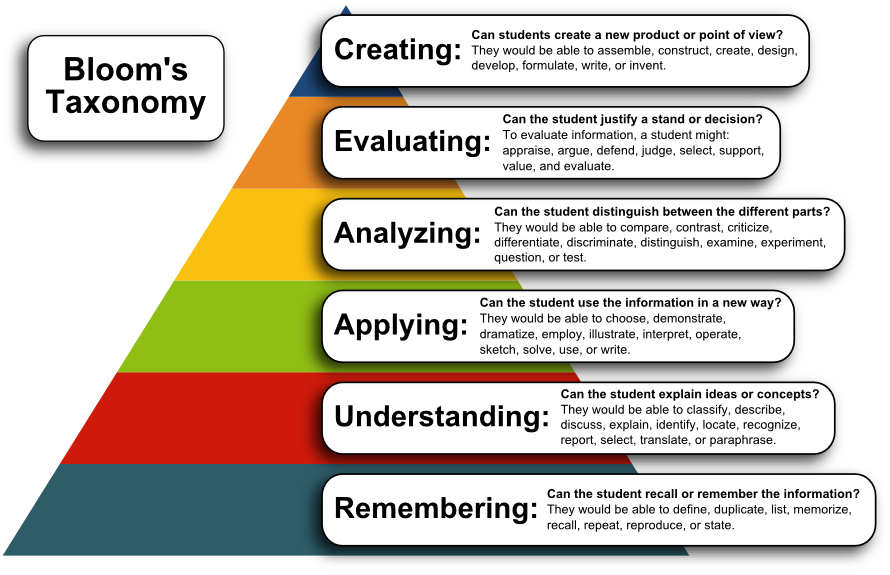
To frame the analysis, start with Bloom’s Taxonomy - the foundational framework for categorizing cognitive levels of learning.
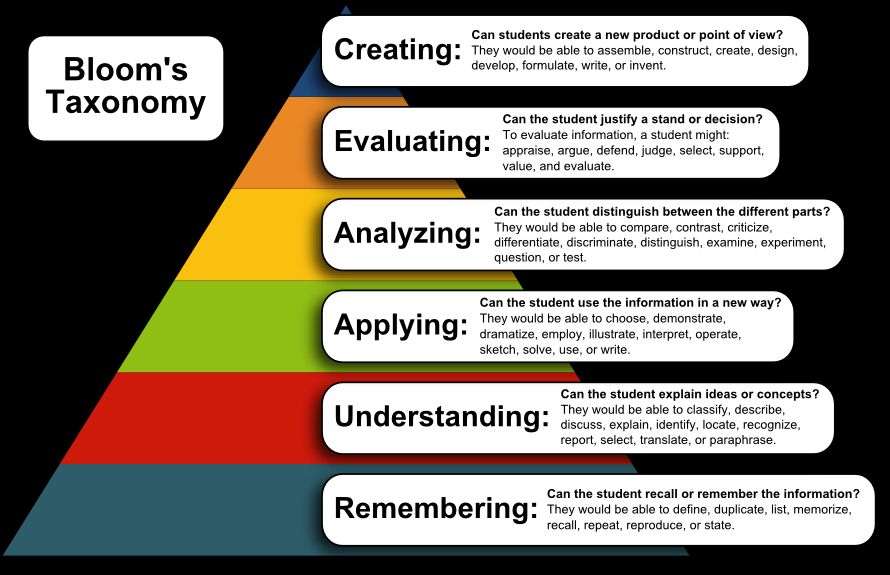
[IMAGE CREDIT: University of Wisconsin Division of Continuing Studies]
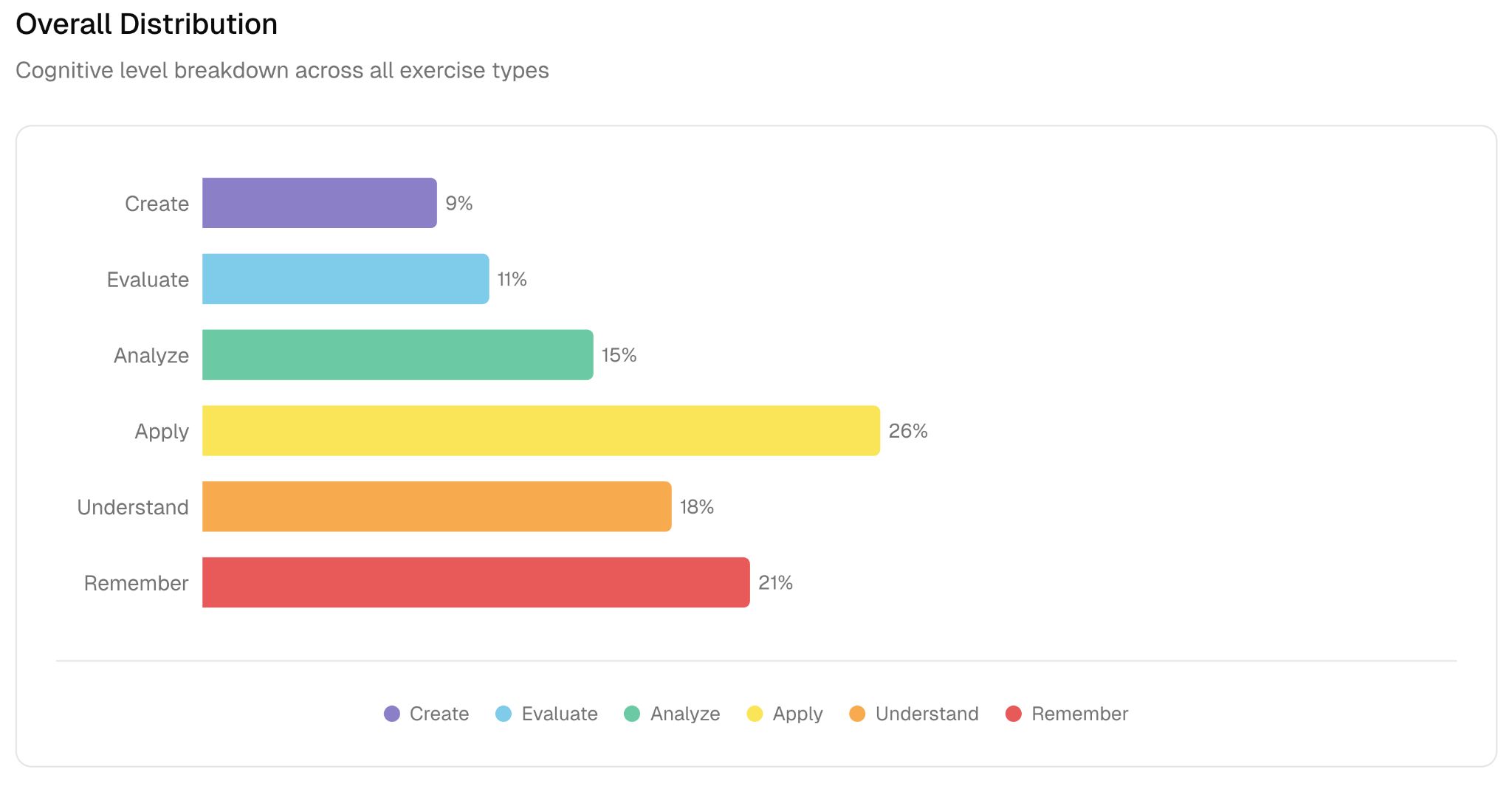
We analyzed all exercises on Uplimit over the past year, a sample size of over 2,400 unique exercises, and found that over 61% were at an Apply or above level on Bloom’s. Learners in a fully online setting weren't just absorbing content. They were applying, analyzing, and creating, in ways that simply weren't possible in online learning before AI.
The cross-section by exercise type is where it gets interesting. Each format unlocked a different layer of the pyramid:
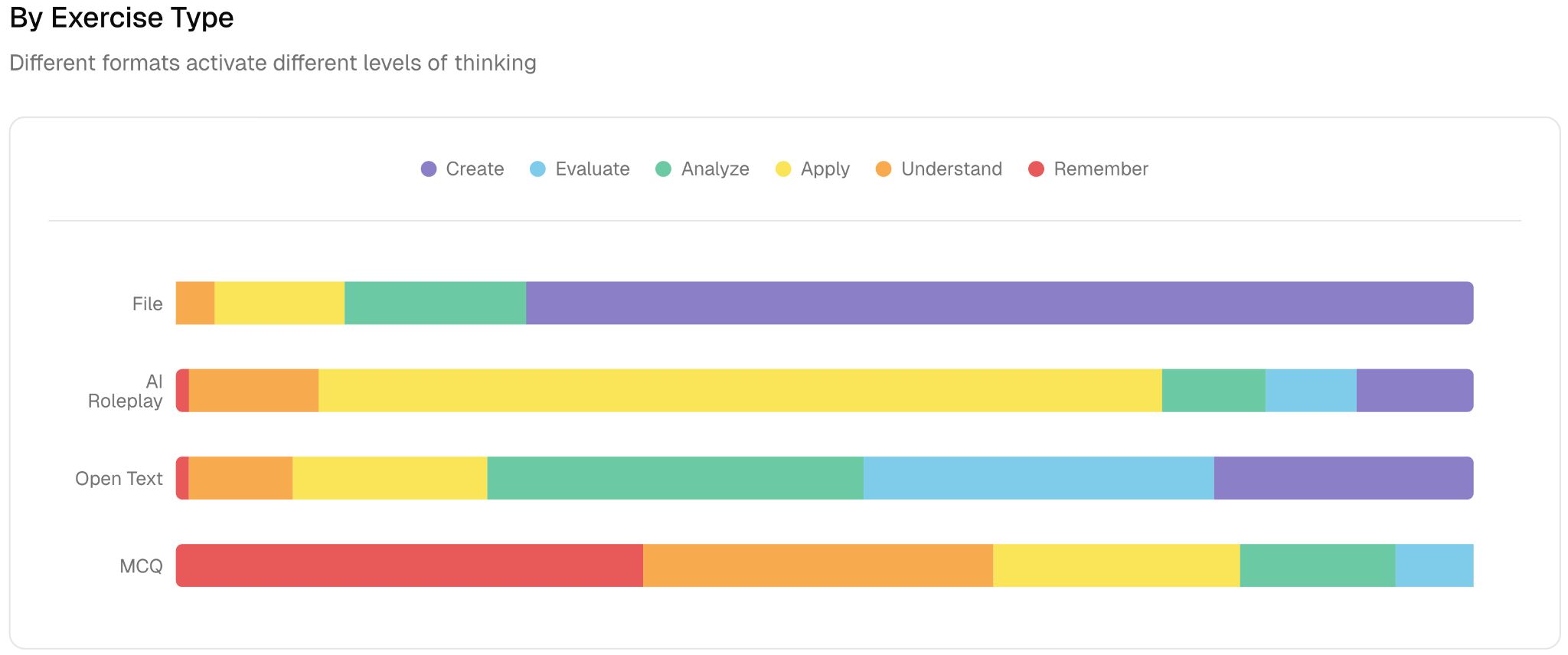
- Multiple choice still does the job it has always done - understanding and recall. Well-structured scaffolding will always matter, and MCQs do it efficiently.
- AI-graded open text questions opened up case studies, analysis, and critical response at a scale that was impossible when every answer needed a human grader.
- Voice roleplays moved learning into application - putting a concept to work in a real conversation, debate, or difficult exchange.
- File response questions, with AI feedback on the artifact itself, finally let online learning reach create - the top of the pyramid, and a level most platforms have never seriously attempted.
What this changes for L&D
The job of a learning leader used to start with a constraint: whatever you wanted learners to do, the platform would force you to assess it as a multiple choice question. That constraint is gone. The new job is choosing the right cognitive level for the outcome you actually need, and then picking the tool that gets you there.
Three Uplimit customers show how differently that plays out in practice.
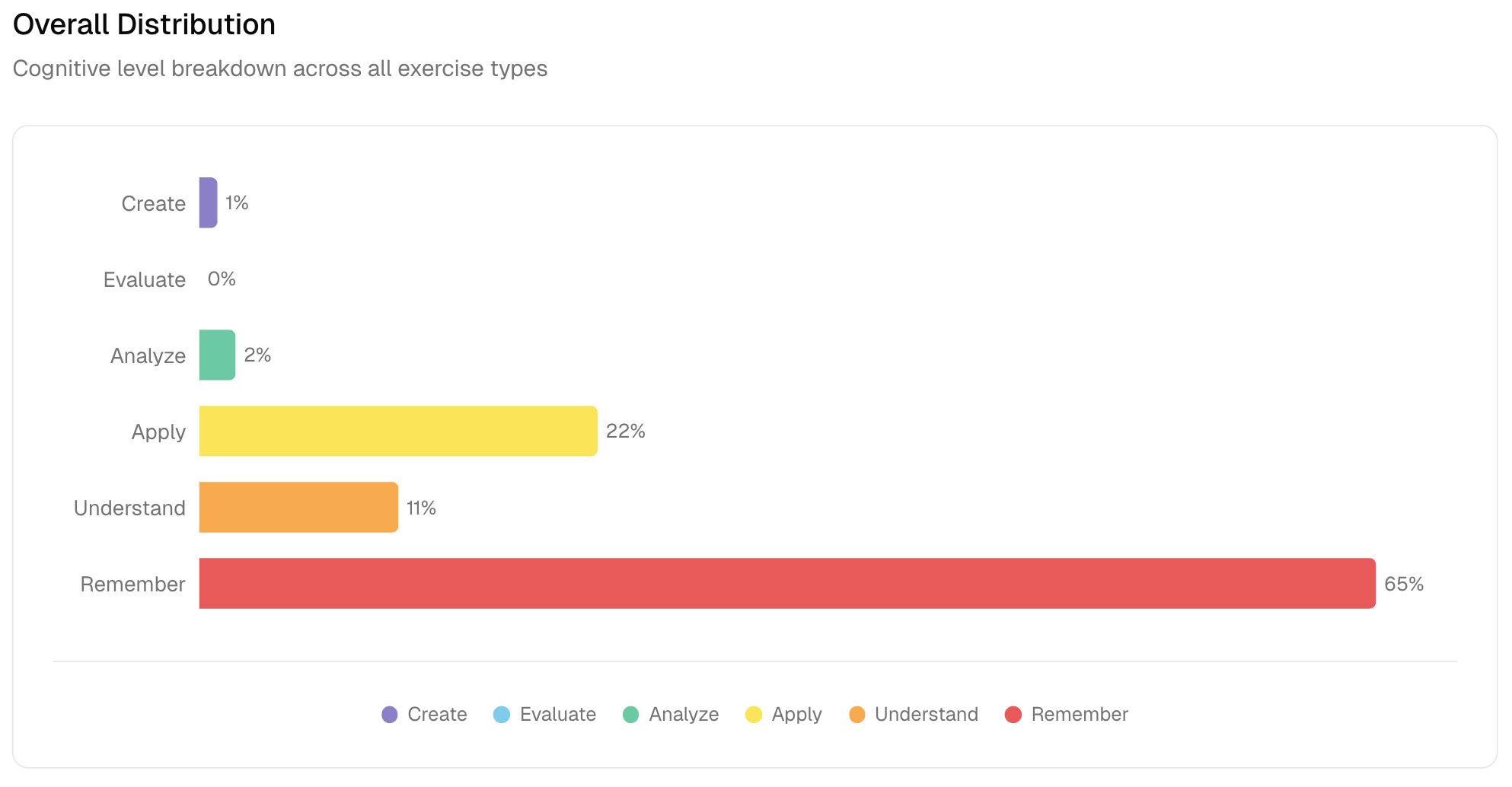
Case I: A leading cloud-based HR platform training incoming customer experience associates. The work is policy-heavy and process-driven, so the cognitive profile is heavy on understanding and recall. Exactly as it should be.
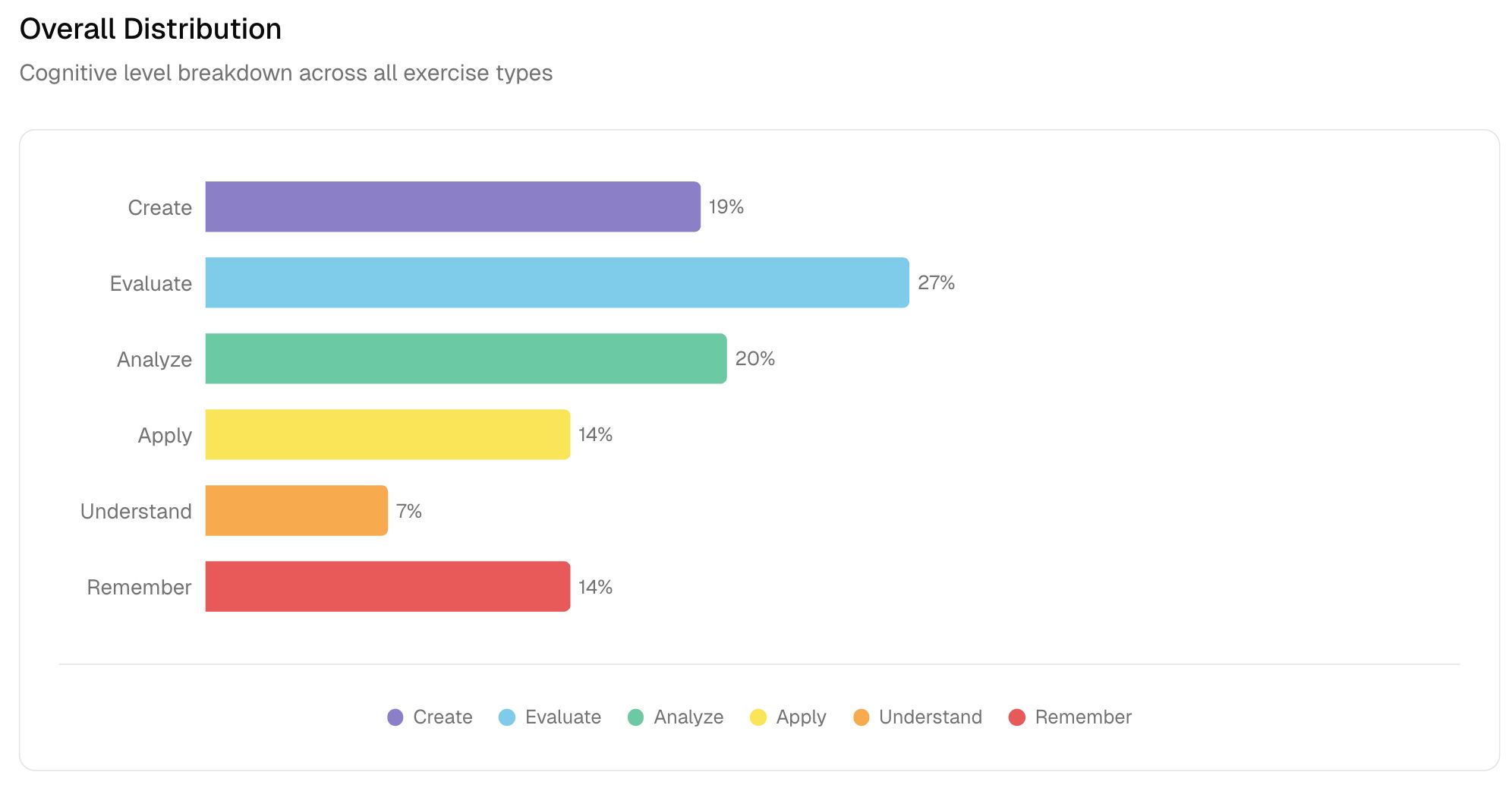
Case II: A top professional services firm enabling associates with problem-solving, communication, and business strategy skills for client-facing work. The training is rooted in case analysis and live client interaction, and the data reflects it, with a heavy concentration in analyze, evaluate, and apply.
Case III: A higher education institution rolling out professional programs in technical and leadership skills. This team has moved past multiple choice almost entirely and built something genuinely transformative for their space - practice and creation as the default mode of learning.
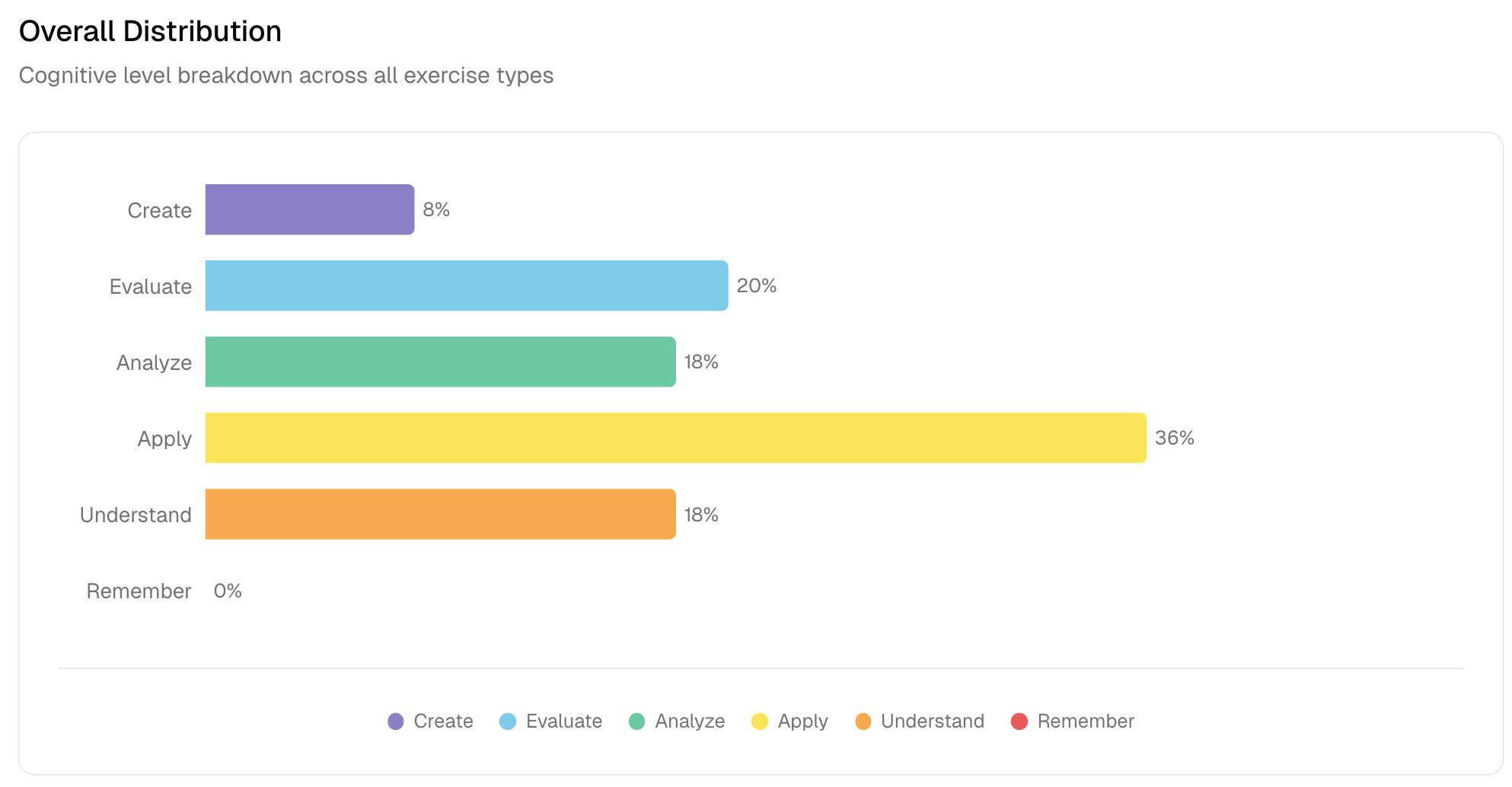
The point isn't that one profile is better than another. The point is that Case II and Case III were never possible before. The learning leaders running those programs aren't doing more work than their peers were a decade ago. They're doing the same work without a ceiling.
Where this goes next
The traditional limits of online platforms are gone. What's left is the harder, more interesting question L&D has wanted to answer all along: what do we actually want learners to be able to do, and how do we know they can do it? For the first time, the platform isn't the answer to that question. The learner is.
Our customers got here by taking a new set of tools and pointing them at their hardest problems. We're focused on what comes after that: learning experiences that don't need to be assembled exercise by exercise, because the depth, the practice, and the feedback show up wherever the learner needs them. Built from source documents and shaped, in real time, around the person doing the learning. That’s the ceiling we’re working on next.